
Adding UV DTF to an Existing Print Business
A practical look at adding UV DTF to a print business, from defining the offer and pricing finishing work to protecting existing production schedules.
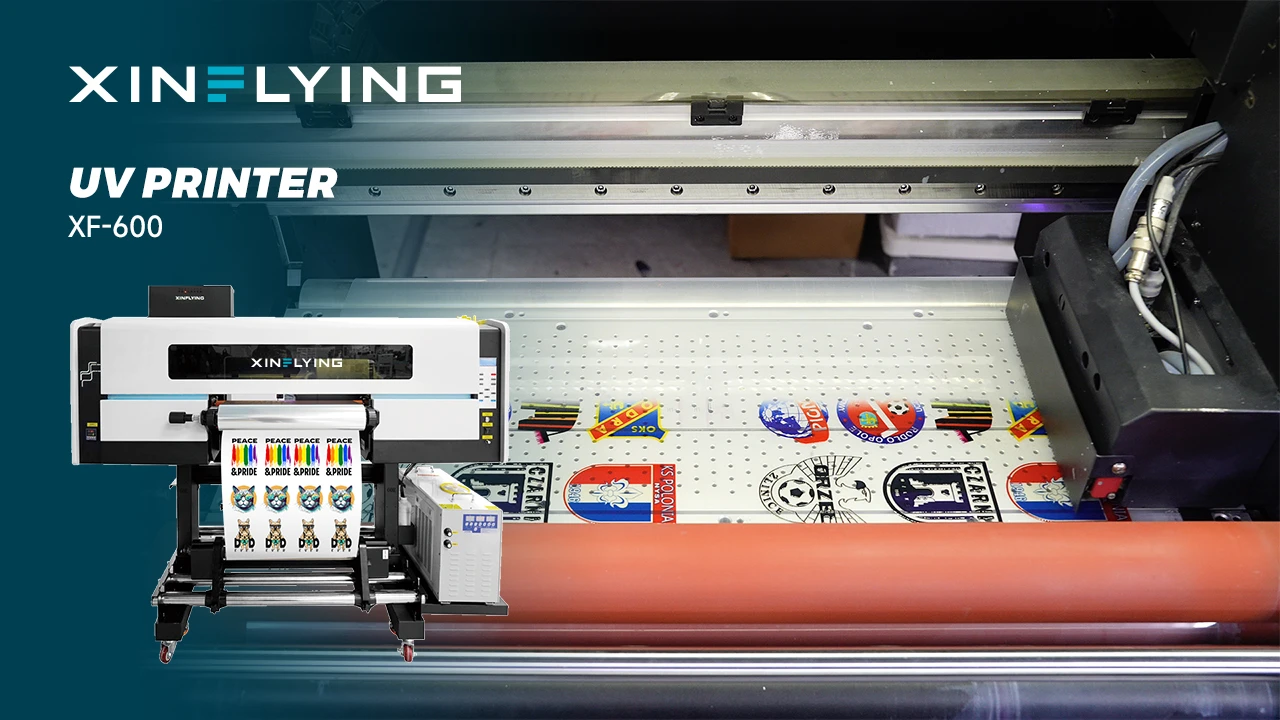
Consider an established print shop whose customer orders conference signage, then asks whether the same graphics can go on acrylic desk plaques. That is a plausible route into UV DTF: an extra part of a job the customer already trusts the shop to handle. It is a different starting point from buying equipment and hoping to find a market afterwards.
UV DTF printing produces graphics on a film system for transfer to suitable hard surfaces. The object does not have to pass through the printer, which makes the process worth considering for certain shapes that are awkward to position for direct printing. It is separate from garment DTF, where a design is heat-pressed onto fabric.
The commercial question is whether the business can add useful work to an existing relationship without creating an unreliable delivery promise. The answer depends as much on what happens at the counter and packing bench as on the printer.
Start With a Service the Existing Customer Can Understand
"We can personalise almost anything" sounds expansive but leaves the buyer to work out what to order. A more useful offer might be a desk plaque in one size, with a company logo and space for a name. The customer can see what is included, and the team has a recognisable product to quote and prepare.
An existing print shop has an advantage here: its enquiries already reveal possible demand. A request for staff welcome packs is different from a one-off name on a cup. The first may suit coordinated company artwork; the second puts more emphasis on handling individual names and small transactions. Those jobs can share a printing process without belonging in the same service package.
Before expanding the catalogue, look at what customers actually ask for alongside current work. A sign shop might see requests for branded desk accessories. A gift retailer might need small seasonal collections. A clothing decorator might be asked to add suitable hard goods to a team order. These are possible extensions, not evidence that every shop has enough demand to own a printer.
The service boundary also determines who does the finishing. Selling printed transfers to another decorator is different from delivering decorated, packed objects. In the first case, the buyer takes on application. In the second, application quality and the condition of the finished blank remain the shop's responsibility. A quote should make that distinction easy to recognise.
Customer-supplied goods deserve their own terms. Replacing a stock bottle is different from replacing an item the customer cannot buy again. A digital proof can settle spelling and layout, but it cannot establish adhesion on an unfamiliar coating. The business needs to decide which supplied items it will accept, what needs a physical trial and what it will decline. That decision is more useful before the goods arrive than after a failed application.
Follow One Order Beyond the Printed Film
Consider a hypothetical order for conference desk plaques with shared event artwork and individual speaker names. The common artwork may be straightforward to print. The names introduce a separate job: somebody has to receive the final list, identify the approved version and match each decorated plaque to the right speaker.
If a customer changes a name after printing, the work does not end with another piece of film. Someone has to identify the affected item, arrange the replacement decoration and make sure the old version does not reach the packing table. A clear cut-off for amendments protects the delivery schedule without pretending that changes are technically impossible.
Pricing only the printed area misses much of this work. Artwork preparation, blank handling, application, inspection and packing all consume time. Spoilage also involves more than ink and film when a finished object has to be replaced. A shop can use its own job records to price these tasks; there is no sound universal profit figure that applies across different blanks, order sizes and labour costs.
For a first commercial trial, separating time into a few broad activities is enough to reveal a bottleneck. If the printer finishes while the team is still applying yesterday's transfers, more printing capacity will not shorten that queue. If the delay is waiting for approved names, the remedy belongs in order administration. The distinction matters when the business already has other work competing for the same staff.
Packing can change the offer too. Plaques intended for different conference rooms need to reach the right organiser, with a label or packing list that survives the handover to dispatch. These details may decide whether a coordinated business order fits the workshop better than a stream of unrelated single-item requests.
This is also where a modest product range can be commercially useful. Reusing a small number of suitable blanks and decoration positions reduces the number of decisions each job creates. The range can grow when the team understands the work, rather than because an application gallery happens to show another attractive object.
Buy for the Work the Business Intends to Keep
Once the service is defined, equipment discussions become more specific. The normal artwork layout helps establish the width required. The planned printing and lamination arrangement determines film handling. The balance between transfer-only and finished-object orders helps explain where staff time is likely to go.
When reviewing commercial UV DTF printer options, ask the supplier to explain the proposed configuration against that work. Usable print width, lamination, the matched ink and film system, training and support are more informative together than an isolated maximum speed.
The existing workshop also needs room in its routine, not merely floor space. Assign responsibility for the machine, its prescribed maintenance and consumable supply. Confirm the workplace requirements and safe-handling information for the actual equipment and materials. An occasional-order service still needs somebody accountable between orders.
Shared staff make scheduling a real capacity decision. If the person applying transfers also finishes signs, accepting an urgent plaque order can delay both services. Reserving a production slot and deciding who handles packing may be more useful than buying a faster printer. The owner needs to see the effect on existing work as well as the revenue attached to the new order.
For a new business, the same discipline starts earlier: identify a customer and a defined product before building a broad personalisation catalogue. For an established printer, the opportunity is closer at hand, but so is the risk of diverting people from dependable existing work.
A sensible expansion leaves the sales team able to explain the offer, the workshop able to fulfil it and the owner able to see what the added work contributes. When those conditions are missing, narrowing the service may be a better next decision than increasing the printer specification.
Continue reading

Stay sharp.
Ideas that move.
Founder stories, emerging ventures, and essays on what's next — straight to your inbox.
Unsubscribe any time.