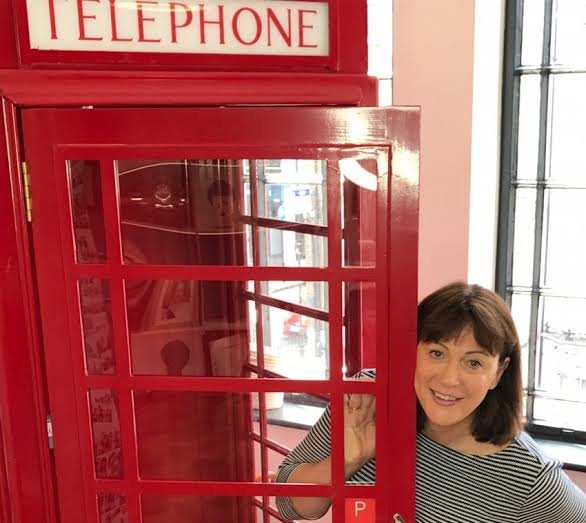
Gemma Clarke is Officer at Tangle Teezer. She joined the Small Business Charter Management Board in 2013. She provided a good business perspective on the Board which helped to grow Business. Gemma in interview, answered to many questions. She gave advice for other budding entrepreneurs. So, without waiting any time, let’s know her answers to the questions.
What has been the most rewarding part of your role with the Small Business Charter?
The most rewarding part is seeing the way it has evolved over the years. When I talk to colleagues in the small business world, I would say that 4 years ago 1 in 10 might say that they engage with their local business school or that they put some of their colleagues through a course. However, now I would say it is the majority that say they do. That is fantastic to see.
What’s really encouraging from business schools is having got to know some of the Deans and seeing some of the great work they’re doing, I think they’ve also become much more enthusiastic about engaging with small businesses and enterprise as well. You can really see it evolving.
What do you hope to see happen in the near future for small businesses in the UK?
Within 3-5 years, I would hope that business schools will become the hub for enterprise and entrepreneurship in the UK, in the same way as they are in the US. I would like to see us evolve along the US model.
What is the US small business model?
In the US, if you are a budding entrepreneur, by default you would go to a local business school or to a business school that specialises in your area of interest. You probably would not think to go to a government department or the local council, you would go to a business school and that’s the way I hope we are headed.
How do you generate new ideas?
I don’t think you generate them in a Eureka moment, it is more about being open to ideas and acting upon them. The world is full of ideas – everyone has got an idea at some time – but not everyone knows how to act upon them. Business schools can really help in that respect. I wouldn’t say I learnt which are good ideas – but I certainly learnt which are definitely not.
What advice would you give to other entrepreneurs who are starting out?
Do it with a colleague, a partner or an associate – someone who shares your vision. The most successful start-ups that survive the first 2 to 5 years tend to be a team. That’s important because you need your ideas to be challenged. Partnerships tend to be more robust than single entrepreneurs.
What are your future plans?
Over the last 12 months, I’ve become absolutely fascinated by the pet industry and the dynamics of what is happening in the world of pets. I’m talking about the humanisation of pets and the implications this has for the products we will buying for our pets in the future.
I am moving to the US in beginning of October to start a new venture and joining loosely with 2 associates that I have known for some time. You’ll hear this a lot about entrepreneurs and the way they sustain strong loose ties with associates over many years – dipping in and out of projects together. I really love that dynamic.
Growing mobile phone ownership, the rise in single households, the growth in commuting time, and pets no longer being seen as just pets means people are starting to see them more as little humans. What this means is that pet products are going to become more humanised.
In 2-3 years’ time, the grooming area of a pet store will look more like the shelves in Boots.
I am really excited about this new venture. I love the start, the ideas and the risks. I don’t like just managing things, I want to see them grow, fast.