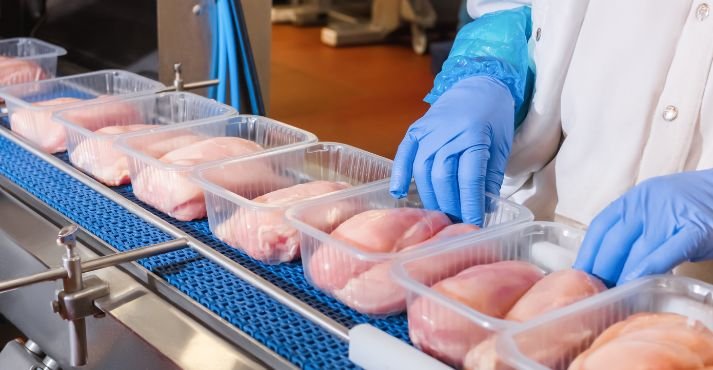
The cultured meat industry is on the brink of a remarkable transformation, with predictions suggesting it could skyrocket from almost zero to over $370 billion within just a decade. This burgeoning market has captured the attention of major food companies worldwide, and one ambitious Swiss startup, Sallea, is positioning itself at the forefront of this culinary revolution with a recently completed $2.6 million funding round.
The Rise of Cultured Meat
As we stand on the cusp of a new era in food production, cultured meat—also known as lab-grown meat—remains in its early stages. Currently, only a few countries, including the US, Singapore, Israel, and the UK, have granted regulatory approval for its sale. However, global food and drug regulators are diligently reviewing numerous applications from various cultured meat companies eager to bring their products to market. While some are targeting pet food, a significant number are focused on human consumption.
Proponents of cultured meat highlight its environmental benefits, arguing that it requires significantly less land and water compared to traditional livestock farming. It also generates fewer emissions and pollution. Although cultured meat products contain cells derived from live animals, many believe they could appeal to vegetarians and vegans seeking alternatives to traditional meat.
Sallea’s Innovative Approach
Enter Sallea, a startup founded in November 2023 by Simona Fehlmann, Dr. Nicole Kleger, and Anna Bünter, all of whom have a background in materials science technology from ETH Zurich, one of Switzerland’s leading universities. Fehlmann envisions a future where cultivated meat extends beyond just sausages and ground meat. “Our technology has the potential to accelerate cellular agriculture by reducing production costs and speeding up time to market for whole cuts like steaks and fillets,” she explains.
Instead of selling finished products, Sallea has created innovative “scaffolds”—three-dimensional, porous structures made from plant-based materials. These scaffolds serve as the framework for producing textured steaks, fillets, and other cuts of meat. By using Sallea’s technology, producers can customize the size, shape, and nutritional profile of their cultivated meats, allowing them to compete more effectively with plant-based alternatives.
A Bright Future for Cultured Meat
The demand for high-quality, sustainable protein is growing, and Sallea’s scaffolds could be the key to unlocking the full potential of cultivated meat. According to a study by Grandview Research, the industry is expected to expand at an astonishing rate of nearly 52% annually between 2023 and 2030, propelling its total market value beyond $370 billion.
Currently, Sallea is collaborating with several food producers to develop testing and proof-of-concept projects. Fehlmann anticipates that it may take another four to five years before cultured meats using their technology hit supermarket shelves, primarily due to the lengthy regulatory approval processes. However, Sallea is strategically positioned to generate revenue sooner by licensing its technology to producers eager to innovate.
The recent funding round underscores investors’ confidence in the cultured meat sector, providing Sallea with the resources it needs to scale up and further refine its products. Led by Founderful and with participation from Kost Capital, this funding brings the total amount raised by Sallea to approximately $4.4 million.
Industry Experts Weigh In
Antonia Albert, principal at Founderful, emphasizes the significance of Sallea’s contributions: “Sallea unlocks the potential of cultivated meat, paving the way for a sustainable, cruelty-free future.” Kost Capital’s general partner, Bodil Sidén, lauds Sallea’s “groundbreaking technology aimed at setting a new standard in sustainable meat production.”
Industry leaders are also enthusiastic about the startup’s promise. Robin Matthew, CEO of Elsa-Group, a prominent player in the Swiss dairy and alternative protein industry, states, “While the potential of cellular agriculture is clear, scaling it effectively requires not just capital and expertise, but innovative solutions like Sallea’s.”
Dr. James Ryall, former chief scientific officer at cultured meat company Vow, adds, “With cultivated meat now regulated and consumed globally, the industry is poised for its next evolutionary leap. Sallea’s edible scaffolds not only pave the way for premium cultivated meat products with superior texture but also significantly lower production costs, offering consumers a wider array of high-quality, sustainable protein options.”
Conclusion
As Sallea strides forward, it embodies the promise of a future where cultured meat is not just a niche market but a mainstream choice for consumers. With their innovative scaffolding technology and a commitment to sustainability, Sallea is poised to play a crucial role in the rapid evolution of the cultured meat industry. As more producers adopt their solutions, we may soon see a world where gourmet, sustainable meats are readily available, revolutionizing how we think about food and its impact on our planet.