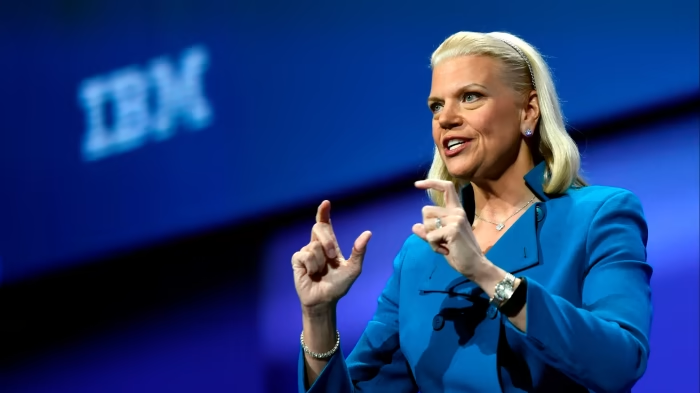
Ginni Rometty, the former CEO of IBM, is a transformative leader who navigated one of the world’s largest technology companies through a period of profound change and innovation. Her tenure at IBM, marked by strategic shifts towards cloud computing, artificial intelligence, and data analytics, reflects her visionary approach to steering a tech giant in the digital age. This article explores Ginni Rometty’s background, accomplishments, challenges, and her impact on IBM and the broader technology industry.
Early Life and Education
Virginia “Ginni” Rometty was born on July 29, 1957, in Chicago, Illinois. She graduated from Northwestern University with a degree in computer science and electrical engineering, laying the foundation for her future career in technology. Rometty’s academic background equipped her with the technical expertise and analytical mindset that would become instrumental in her leadership role at IBM.
Career Path at IBM
Ginni Rometty joined IBM in 1981 as a systems engineer, beginning her journey with the company in a technical capacity. Over the years, she held various executive positions across different divisions, including sales, marketing, and strategy. Rometty’s diverse experience within IBM provided her with a deep understanding of the company’s operations, challenges, and opportunities in the rapidly evolving tech landscape.
Rise to CEO
In 2012, Ginni Rometty made history by becoming the first woman to lead IBM as its CEO. Her appointment came at a pivotal moment for the company, as it faced significant challenges in adapting to changing market dynamics and technological advancements. Rometty’s strategic vision and leadership capabilities were critical in reshaping IBM’s direction and restoring its position as a leader in enterprise technology solutions.
Strategic Focus on Cognitive Computing and AI
Under Ginni Rometty’s leadership, IBM underwent a strategic transformation focused on emerging technologies such as cognitive computing and artificial intelligence (AI). She spearheaded IBM’s initiatives in cognitive computing with the development and launch of IBM Watson, a groundbreaking AI platform capable of natural language processing and data analytics. Watson’s applications spanned healthcare, finance, and other industries, demonstrating IBM’s commitment to leveraging AI for transformative impact.
Embracing Cloud Computing
Recognizing the shift towards cloud computing and its potential to redefine IT infrastructure, Ginni Rometty led IBM’s expansion in cloud services. She championed the acquisition of SoftLayer Technologies in 2013, bolstering IBM’s cloud capabilities and laying the groundwork for its hybrid cloud strategy. Rometty’s strategic investments in cloud infrastructure and services positioned IBM as a key player in the competitive cloud computing market.
Championing Diversity and Inclusion
Throughout her tenure, Ginni Rometty prioritized diversity and inclusion initiatives within IBM and across the tech industry. She advocated for gender equality in leadership roles and implemented programs to foster a more inclusive corporate culture. Rometty’s commitment to diversity extended beyond IBM’s internal policies; she actively promoted diversity in STEM education and workforce development, aiming to create opportunities for underrepresented groups in technology.
Challenges and Transformations
Leading IBM through a period of rapid technological change and market disruption presented numerous challenges for Ginni Rometty. The company faced stiff competition from emerging tech giants, shifting customer preferences towards cloud-based solutions, and the need to adapt legacy systems to modern digital architectures. Rometty’s leadership style emphasized agility, innovation, and strategic partnerships to navigate these challenges and position IBM for long-term success.
Legacy and Impact
Ginni Rometty’s legacy at IBM is defined by her bold leadership, strategic foresight, and commitment to innovation. Under her stewardship, IBM expanded its footprint in emerging technologies, including AI, cloud computing, and blockchain. Rometty’s initiatives reshaped IBM’s business model and product portfolio, reinforcing its position as a leader in enterprise IT solutions. Her advocacy for responsible AI development and ethical use of technology underscored IBM’s commitment to societal impact and sustainable innovation.
Retirement and Continued Influence
In 2020, Ginni Rometty stepped down as CEO of IBM, passing the reins to Arvind Krishna. Despite her retirement from IBM’s executive leadership, Rometty remains influential in the tech industry and continues to advocate for technology-driven solutions to global challenges. She serves on the boards of several organizations and contributes her expertise to initiatives focused on digital transformation, leadership development, and strategic innovation.
Conclusion
In conclusion, Ginni Rometty’s tenure as CEO of IBM epitomizes visionary leadership in the face of technological disruption and market evolution. Her strategic focus on AI, cloud computing, and cognitive solutions positioned IBM at the forefront of innovation in enterprise technology. Rometty’s legacy extends beyond business achievements; it encompasses her advocacy for diversity, ethical leadership, and the transformative power of technology to drive positive change. As IBM continues to innovate and adapt to new challenges, Ginni Rometty’s impact on the company and the tech industry as a whole serves as a testament to her enduring legacy as a trailblazer and visionary leader.