India’s drone rules, which were advised a week ago, offer minimal regarding defending individuals’ protection. The principles additionally don’t do what’s necessary to address issues of reconnaissance that drones present when utilized by law requirement organizations on the ground.
The Civil Aviation Ministry had distributed a draft of these standards in June 2020 and had welcomed remarks from partners. The remarks were rarely disclosed. The told rules are a push to outline devoted enactment around drone use in the country, which so far has been directed as common flight prerequisites under the Aircraft Act.
Think about this: The guidelines notice the word ‘protection’ just a single time. Looking for assent from individuals before a drone is flown over them isn’t referenced even once. The standards say that drones should fly while “guaranteeing the protection of an individual and its property during activity”. Notwithstanding, they neglect to outline how this is to be guaranteed. Moreover, while infringement of this standard has been punished, there is no system for a person to look for plan of action or harms.
This arrangement likewise leaves the onus of securing the protection of people on the individual flying the drone, and the actual guidelines offer minimal as far as procedural shields.
At that point there’s the most concerning issue of all. The principles say that the public authority can exclude any of its organizations to convey drones on the off chance that it is “in light of a legitimate concern for security of India,” or in “public interest”.
There have been a few occurrences of law implementation organizations sending drones without looking for the necessary authorisations from the Ministry of Civil Aviation and the aircraft controller Directorate General of Civil Aviation. Drones have been flown more than a few fights. This implies that there is neither openly accessible data about the way or reason for which these organizations use drones, nor is there any straightforwardness around the sorts of drones they send.
The chance of wide translation of ‘public interest’ and ‘interest of safety’ could empower mass reconnaissance. Together, these outcome in a circumstance where balanced governance on the utilization of such exceptionally intrusive innovation by government offices are totally deficient.
With regards to the information that a drone would gather, which may well incorporate the delicate individual information of individuals like their facial information, the guidelines say that the drone pilot should guarantee the security of the information and ensure that it isn’t imparted to any outsider.
While it is estimable that the standards request administrators to ensure that the information gathered by their drones ought to be shielded, they miss the mark regarding setting down explicit conditions under which a drone ought to be permitted to catch pictures and recordings. Neither do they manage how its recording should be put away, prepared, and protected.
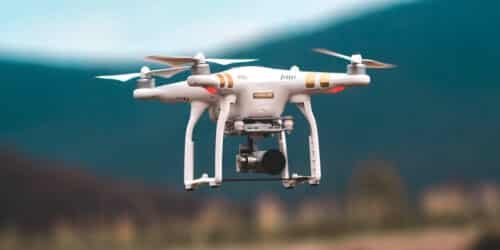
Current drones are amazingly effective and proficient gadgets. They for the most part come outfitted with camera frameworks fit for catching superior quality pictures and recordings. Much of the time, visuals from a drone’s camera have likewise been handed-off to a focal checking center point for constant observing by law implementation offices.
Additionally, while the standards expect drones to go through various tests prior to being ensured to fly, none of those tests includes checking the drone for inbuilt security plans. Despite the fact that in its Drone Ecosystem Policy Roadmap, the Civil Aviation Ministry referred to protection by plan as the norm to wipe out dangers of future security hurts by administrators, the guidelines invest no energy on this.
“Drones represent a novel administrative test in light of their fluctuated usefulness that empowers them to gather broad information through high goal cameras, infrared sensors, facial acknowledgment innovation, tag distinguishing proof instruments, and warm imaging, all frequently without the information or assent of the people whose information is being gathered,” Saumya Jaju, an attorney who’s investigated on India’s drone guidelines, told Entrackr.
“By not ordering security by plan as a fundamental component of all drones in the country, the standards bargain on individuals’ protection. Having protection by configuration would have guaranteed that security is implanted into the plan, equipment, and programming of the drone at the assembling and activity stage,” she added.
The European Safety Agency Regulation orders that a drone administrator does an information insurance sway evaluation in accordance with the General Data Protection Regulation before activities. Notwithstanding, India’s standards have no such necessity, and don’t specify the Personal Data Protection Bill, 2019, which is right now being pondered upon by a joint Parliamentary panel.