


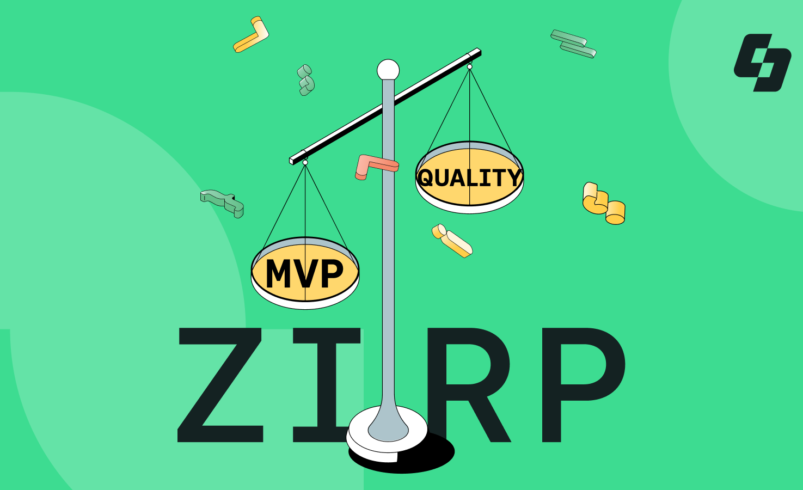
The ZIRP Hangover: Why Convoy failed After $1B+ Funding
- January 11, 2026
- 0
Why Convoy failed despite $1B+ in funding? Learn how the end of ZIRP exposed weak unit economics and ended growth-at-all-costs startups.
Why Convoy failed despite $1B+ in funding? Learn how the end of ZIRP exposed weak unit economics and ended growth-at-all-costs startups.
| Metric | The Convoy Stats |
| Company Name | Convoy |
| Founders | Dan Lewis & Grant Goodale (ex-Amazon) |
| Total Funding Raised | ~$1 Billion (Debt + Equity) |
| Valuation at Peak | $3.8 Billion (Series E, 2022) |
| Key Investors | Bill Gates, Jeff Bezos, Y Combinator, CapitalG |
| Lifespan | 2015 – October 2023 |
| Primary Failure Mode | The End of ZIRP (Zero Interest Rate Policy) + Freight Recession. |
In April 2022, Convoy was on top of the world. They had just raised $260 million at a $3.8 billion valuation. They were the “Uber for Trucking,” backed by the two richest men on the planet, Jeff Bezos and Bill Gates. They were disrupting an $800 billion archaic industry with slick software and automation.
Eighteen months later, they collapsed.
Not “struggling.” Not “downsizing.” Shut down.
On October 19, 2023, CEO Dan Lewis sent a memo stating that operations were ceasing immediately. There would be no severance and no warning. The servers went dark.
How does a company with $1 billion in backing and a $3.8 billion price tag evaporate in a weekend?
It wasn’t just bad luck. It was the first major casualty of a new economic reality. Convoy was a creature of the ZIRP (Zero Interest Rate Policy) era, and when the cheap money turned off, the oxygen ran out.
Convoy’s collapse surprised many in tech and logistics alike. But beneath the shock lay a deeper lesson:
If your business model only works when money is free, you don’t have a business — you have a bet.
To the outside world, Convoy was a technology company.
The pitch was impressive: The trucking industry is fragmented and inefficient. Millions of “empty miles” are driven by trucks with no cargo.
Convoy’s algorithm would match shippers (like Unilever and P&G) with truckers perfectly, reducing waste and carbon emissions.
Investors bought the narrative that Convoy was a Platform.
In Silicon Valley, platforms trade at 20x revenue. Logistics brokerages trade at 0.5x revenue.
Convoy convinced the world they were the former.
They hired hundreds of data scientists and engineers, paid Amazon-level salaries, and burned cash to acquire market share, assuming that “Scale” would eventually solve everything.
On the surface, Convoy had all the ingredients of a modern tech success: data-driven marketplace, institutional backing, and a founder with Amazon experience. But two critical realities undercut its trajectory:
Convoy’s software did streamline freight matching, but logistics remains a low-margin, relationship-driven industry where unpredictability rules.
Software alone couldn’t ensure stable pricing or margin expansion, especially as freight demand normalized after pandemic spikes.
Convoy’s model relied on growth subsidized by capital; essentially using funding to sustain operations with the expectation that scale would eventually unlock profitability.
But when freight rates softened and investment dried up, those assumptions collapsed.
A CEO memo cited “a massive freight market collapse and dramatic monetary tightening” as the perfect storm that crushed progress and deterred buyers.
In 2023, two things happened simultaneously that created a perfect storm:
In the old days (2021), Convoy could have just raised another $500 million to survive the downturn.
But in the post-ZIRP world, investors stopped funding “growth at all costs.”
They demanded profitability. Convoy, built to burn cash for growth, couldn’t pivot to profitability fast enough. They had too much debt and too much bloat.
The “Point of No Return” wasn’t the day they shut down. It was the day they signed a $100 million venture debt deal with Hercules Capital. When the valuation dropped, the debt covenants tightened, and the bank effectively owned the company.
Most narratives around Convoy’s demise point to industry downturns or freight demand normalization. Those are incomplete.
The Real Cause? They mistook a Cycle for a Trend.
The deeper cause was a business model that only worked when money was cheap.
When capital costs were near zero, the ZIRP era, investors were willing to fund unprofitable growth models in hopes that future scale would solve today’s economics.
But once interest rates rose and funding became more selective, the mask slipped: Convoy’s unit economics couldn’t stand on their own.
It was a vivid example of how macro trends (interest rates, risk appetite) directly shape micro outcomes (startup viability).
Convoy’s model had growth without sustainability baked in — a fatal flaw once the economic backdrop changed.
This is the “high gravity” wisdom for founders:
Convoy was “worth” $3.8 billion. That number was fiction. It was a spreadsheet agreement based on future promises.
Paul Graham’s famous metric. If investors stopped writing checks today, would your business survive? Convoy was Default Dead. They required external capital to exist.
Are you a tech company (80% margin) or a service company with a website (20% margin)? Convoy priced itself like software but had the costs of a logistics firm.
Are you building a “ZIRP” company in a non-ZIRP world? Check yourself:
The era of “Blitzscaling” is paused. The era of “Efficient Scaling” is here.
Convoy’s collapse teaches us that Unit Economics are gravity. You can defy gravity for a while with a rocket engine made of cash, but eventually, the fuel runs out.
Don’t build a business that works only in a boom. Build a business that works in a bust. That is the only way to become unkillable.
Efficiency is the new Growth.