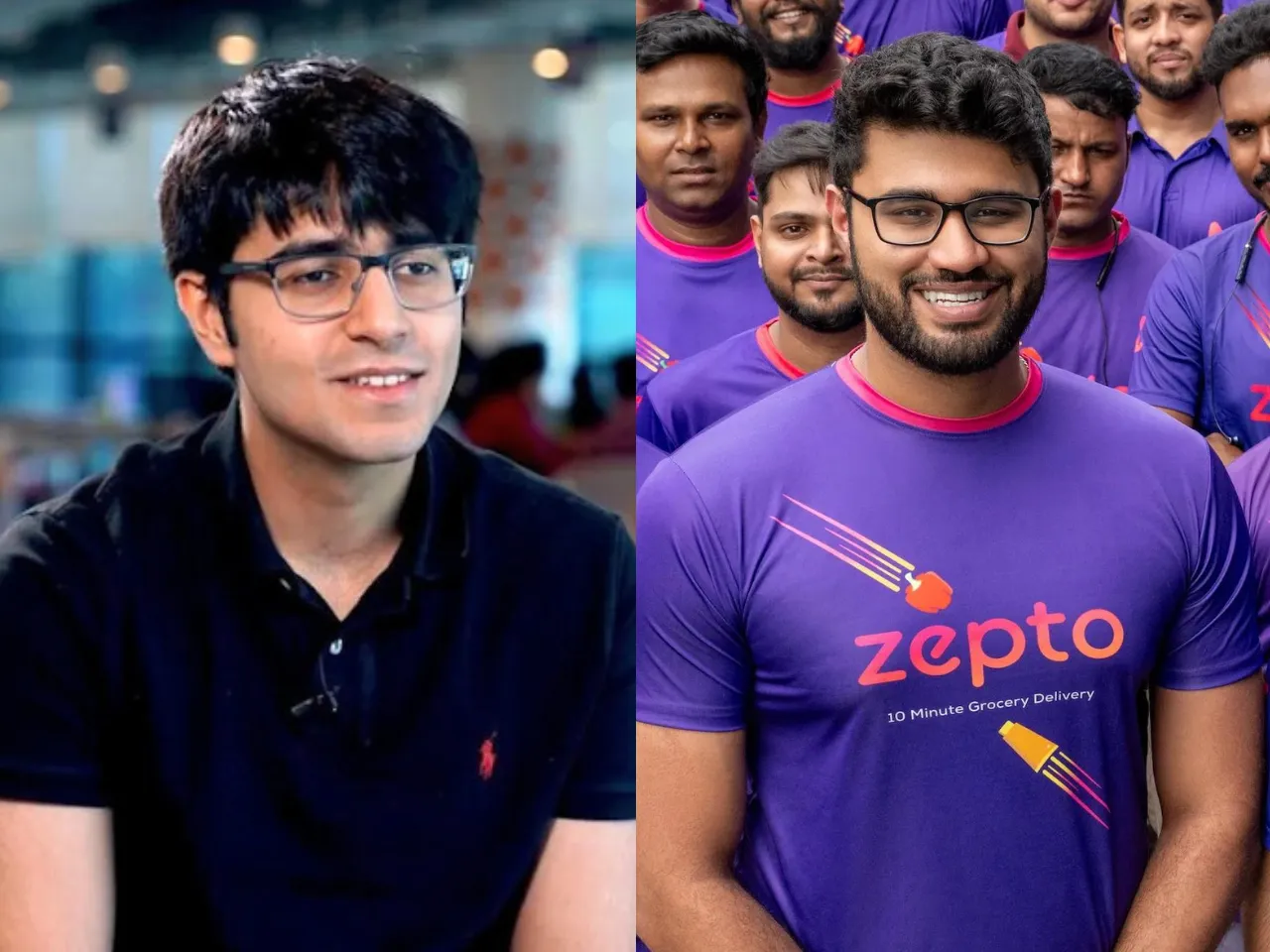
India’s quick-commerce battleground is about to get its biggest shake-up yet. According to reports, 10-minute delivery darling Zepto is raising a staggering $450 million at a jaw-dropping $7 billion valuation.
For a company that launched just three years ago, this is no ordinary milestone — it’s a power move that cements Zepto as one of the hottest names in India’s startup universe. But behind the billion-dollar headlines lies a critical question: can Zepto live up to its sky-high valuation, or is this a bubble waiting to burst?
The Big Money Backers
While there’s no official announcement yet, insiders say the round is being co-led by some of the world’s most powerful investors.
- Calpers (California Public Employees’ Retirement System): One of the largest pension funds in the United States, with over $450 billion in assets, is reportedly taking the lead. For Zepto, bagging Calpers is more than just cash — it’s a stamp of credibility.
- General Catalyst: A loyal backer of Zepto, doubling down on its belief in India’s quick-commerce gold rush.
- Others Joining the Party: Avra, Lightspeed, Glade Brook, StepStone, Nexus Venture Partners, and Avenir are also expected to write big checks.
This cocktail of global pension funds, seasoned VCs, and aggressive growth investors signals one thing: Wall Street and Sand Hill Road believe Zepto is India’s next decacorn-in-the-making.
Primary vs. Secondary — Who’s Cashing Out?
Interestingly, the $450 million isn’t all going into Zepto’s war chest. Here’s the breakdown:
- $350–380 million will flow in as primary capital, giving Zepto fresh fuel for expansion, hiring, and tech innovation.
- $70–100 million will come via secondary transactions, meaning early investors or employees could be partially cashing out.
This mix suggests that while Zepto is raising aggressively for growth, it’s also rewarding insiders who bet on the company early — a classic sign of growing maturity.
Zepto’s Meteoric Rise
Zepto’s journey has been nothing short of spectacular. Founded in 2021 by two Stanford dropouts, Aadit Palicha and Kaivalya Vohra, the company bet big on ultra-fast grocery delivery, promising to bring essentials to customers’ doors in just 10 minutes.
At the time, skeptics dismissed the model as a fad. But fast forward to today, and Zepto has:
- Expanded to 10+ major cities across India.
- Built a network of hundreds of dark stores strategically placed in dense neighborhoods.
- Captured millions of loyal customers who now equate Zepto with convenience.
From a scrappy startup to a multi-billion-dollar powerhouse in just 3 years, Zepto has become the poster child for India’s new-age consumer tech boom.
The Rivalry That Fuels Growth
Of course, Zepto isn’t alone. The quick-commerce race has turned into a gladiator arena featuring some of India’s biggest names:
- Blinkit (owned by Zomato): Backed by a listed giant with deep pockets and a growing synergies play.
- Swiggy Instamart: Leveraging Swiggy’s massive delivery fleet and customer base.
- BigBasket’s BB Now: Supported by Tata Group’s heft.
But Zepto’s youthful brand, slick tech, and aggressive execution have helped it punch above its weight. This fundraise signals that investors believe Zepto has what it takes to not just compete — but to dominate.
What Will Zepto Do With $450 Million?
The obvious question: where will all this money go? Insiders suggest three major priorities:
- Expansion Blitz: Zepto wants to double down on Tier-1 cities while making inroads into Tier-2 urban hubs, where demand for instant commerce is just beginning to explode.
- Dark Store Network: Building more warehouses to cut delivery times further and ensure availability of high-demand SKUs.
- Technology & AI: Optimizing inventory, routing, and predictive analytics to squeeze out efficiency and improve margins.
In short, Zepto is gearing up for scale at lightning speed.
The Billion-Dollar Question: Can It Be Profitable?
While Zepto’s valuation is skyrocketing, critics argue that the economics of 10-minute delivery remain shaky. Ultra-fast logistics are capital intensive, and margins on grocery items are razor thin.
To make the math work, Zepto must:
- Achieve high order density per dark store.
- Monetize through ad revenues from FMCG brands.
- Cross-sell higher-margin products like ready-to-eat meals.
The $7 billion valuation assumes Zepto can crack this code. If it fails, the bubble could deflate fast.
Why Investors Are Betting Big Anyway
So why are top global funds willing to pour money into a risky business model? Three reasons:
- India’s Market Size: A young, urban population with rising disposable income is addicted to convenience. Quick-commerce could easily become a $50 billion+ industry in the next decade.
- Zepto’s Execution: Despite skepticism, Zepto has consistently outperformed rivals in speed, customer retention, and brand recall.
- Future Ad Play: Just like Amazon turned its retail platform into an ad powerhouse, Zepto could become the go-to channel for brands targeting India’s urban millennials.
In other words, Zepto is no longer just a grocery startup — it’s an emerging consumer platform.
Zepto at $7 Billion: Jackpot or Bubble?
The funding news has the startup ecosystem buzzing. On one side, cheerleaders hail it as proof that Indian startups are scaling faster than ever before. On the other, skeptics warn of a valuation bubble that could burst if growth slows.
Either way, Zepto has already rewritten the rules of India’s e-commerce game. From college dropout founders to potential decacorn builders in under five years, their story is nothing short of cinematic.
The $450 million fundraise, if confirmed, will be a defining moment — not just for Zepto, but for India’s entire quick-commerce sector.
The Bottom Line
Zepto’s rumored $450 million raise at a $7 billion valuation is a thunderclap in India’s startup skies. It’s bold, it’s risky, and it’s a bet on the future of instant gratification.
If Zepto delivers — literally and financially — it could set the gold standard for quick commerce worldwide. But if it stumbles, it might go down as one of the most expensive experiments in India’s startup history.
For now, though, Zepto’s message is loud and clear: the 10-minute delivery king is here to stay.