The Trailblazers of American Entrepreneurship: 5 Icons Who Changed the Game
October 24, 2024
0
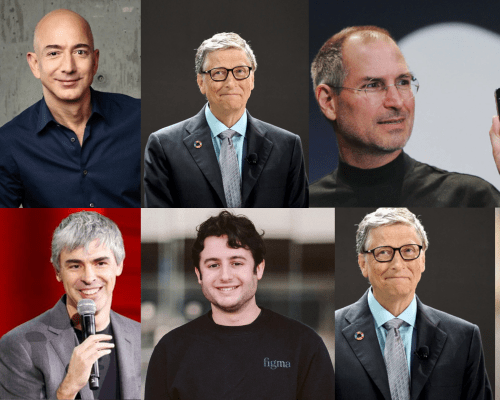
Five iconic entrepreneurs transformed industries, inspiring future innovators with their journeys. In the vast landscape of American entrepreneurship, a few remarkable individuals stand out as true game changers.
Share:
Five iconic entrepreneurs transformed industries, inspiring future innovators with their journeys.
Five iconic entrepreneurs—Jobs, Gates, Page, Bezos, Field—embody innovation and resilience in business.
In the vast landscape of American entrepreneurship, a few remarkable individuals stand out as true game changers. These visionaries have not only built successful empires but have also redefined entire industries and shaped the way we live, work, and interact with technology. Their journeys are filled with passion, creativity, and resilience, serving as powerful inspiration for anyone dreaming of making their mark in the business world.
From revolutionizing personal computing to transforming how we shop online, these entrepreneurs embody the spirit of innovation that drives the American dream. Each of them faced unique challenges and setbacks, yet their unwavering determination led them to achieve groundbreaking successes. As we explore the stories of five iconic figures—Steve Jobs, Bill Gates, Larry Page, Jeff Bezos, and Dylan Field—we’ll uncover the lessons they learned along the way, offering invaluable insights for the next generation of dreamers and doers.
1. Steve Jobs: The Visionary Who Redefined Technology
Steve Jobs: Revolutionized technology with Apple, emphasizing design and user experience.
Steve Jobs, co-founder of Apple Inc., is celebrated as one of the most innovative minds in technology. Born on February 24, 1955, in San Francisco, Jobs showed an early passion for electronics, leading him to Atari before launching his entrepreneurial journey.
In 1976, Jobs teamed up with Steve Wozniak and Ronald Wayne to create Apple in a garage. Their first product, the Apple I, was groundbreaking, but it was the Apple II that truly launched the personal computing revolution. Jobs championed aesthetic excellence and user-friendly design, exemplified by the introduction of the Macintosh in 1984—the first successful personal computer with a graphical user interface.
Despite facing challenges, including a forced departure from Apple in 1985, Jobs returned in 1996 and drove the company to introduce iconic products like the iPhone and iPad. His legacy endures in the realms of technology and design, inspiring countless entrepreneurs to pursue innovation.
Lessons from Jobs:
Embrace Disruption: Think beyond the conventional to drive meaningful change.
Learn from Failure: Setbacks are stepping stones to success; use them as learning opportunities.
Prioritize Quality: Focus on creating exceptional products that resonate with consumers.
Know Your Audience: Understand the needs and desires of your market to innovate effectively.
Cultivate a Strong Brand: Build a brand identity that connects emotionally with customers.
2. Bill Gates: The Architect of a Software Empire
Bill Gates: Co-founded Microsoft, transforming software and prioritizing philanthropy through innovation.
Bill Gates co-founded Microsoft in 1975, embarking on a journey that would transform the software industry. Born on October 28, 1955, Gates showcased programming brilliance from a young age. After dropping out of Harvard, he and his friend Paul Allen developed a BASIC interpreter for the early PC, setting the stage for Microsoft’s success.
The pivotal moment came in 1980 when IBM contracted Microsoft to create its operating system, leading to the development of MS-DOS. Gates’s vision of user-friendly software led to the release of Windows in 1985, which became a household name.
Gates’s legacy is marked by innovation and controversy, with his aggressive business strategies drawing criticism. Nevertheless, his commitment to philanthropy through the Bill & Melinda Gates Foundation has had a profound global impact, addressing health, education, and poverty.
Lessons from Gates:
Pursue Your Passion: Let your interests fuel your entrepreneurial journey.
Take Calculated Risks: Bold moves can lead to great rewards; trust your instincts.
Focus on User Experience: Design software that is intuitive and meets user needs.
Persist Through Challenges: Resilience is key to overcoming obstacles in business.
Give Back: Successful entrepreneurs can create positive change through philanthropy.
3. Larry Page: The Innovator Behind Google
Larry Page: Co-founded Google, reshaping information access and fostering a culture of experimentation.
Larry Page co-founded Google in 1998, revolutionizing how we access information. Born in 1973 to computer science professors, Page’s love for technology led him to Stanford University, where he met his future partner Sergey Brin.
Together, they developed Backrub, a search engine that ranked websites based on importance. With persistence and strategic funding, Google rapidly gained traction, becoming the largest search engine in the world. The company’s IPO in 2004 further solidified its status, making Page and Brin billionaires overnight.
Under Page’s leadership, Google expanded into various markets, including mobile devices and self-driving cars, continually pushing the envelope of innovation. He emphasized a culture of experimentation, encouraging teams to explore new ideas without the fear of failure.
Lessons from Page:
Follow Your Passion: Let your interests drive your business ambitions.
Value Collaboration: Partnering with like-minded individuals can amplify success.
Solve Real Problems: Identify gaps in the market and develop solutions.
Adapt and Scale: Be flexible and responsive to market changes and growth opportunities.
Encourage Innovation: Foster a culture where creativity and experimentation are celebrated.
4. Jeff Bezos: The Pioneer of E-Commerce
Jeff Bezos: Founded Amazon, revolutionizing e-commerce with customer obsession and strategic diversification.
Jeff Bezos transformed the retail landscape by founding Amazon in 1994. Born in 1964 in Albuquerque, New Mexico, Bezos demonstrated entrepreneurial flair early on, launching a program to inspire creativity in children while in high school. After graduating from Princeton, he worked on Wall Street before seizing the opportunity presented by the Internet.
Starting as an online bookstore, Amazon quickly diversified, offering everything from electronics to groceries. Bezos’s focus on customer satisfaction, innovative features like personalized recommendations, and the launch of Amazon Web Services established the company as a global powerhouse.
Bezos’s commitment to innovation led to the creation of products like the Kindle and services such as Amazon Prime, reshaping consumer behavior and expectations. His mantra, “Customer Obsession,” underscores the importance of putting the customer first.
Lessons from Bezos:
Seize Opportunities: Don’t hesitate to pursue new ventures that excite you.
Start Small, Scale Smartly: Focus on a manageable idea before expanding.
Obsess Over Customers: Prioritize customer satisfaction in all decisions.
Diversify Strategically: Expand your offerings based on market demand and opportunities.
Think Long-Term: Develop a vision that considers future growth and innovation.
5. Dylan Field: Democratizing Design with Figma
Dylan Field: Co-founded Figma, democratizing design with a user-friendly collaborative platform.
Dylan Field, born in 1992, co-founded Figma, a groundbreaking design platform that has democratized design. Initially an actor, Field transitioned to tech after receiving the Thiel Fellowship, which allowed him to focus on his entrepreneurial aspirations.
Partnering with Evan Wallace, Field aimed to create a user-friendly design tool that would enable collaborative work online. After overcoming early skepticism and technical challenges, Figma launched in 2015 and quickly became a favorite among designers for its intuitive interface and collaborative features.
Field’s approach emphasizes the importance of user feedback, iterative design, and accessibility, making Figma a go-to tool for designers across various industries.
Lessons from the Field:
Embrace Diverse Experiences: Varied backgrounds can enhance your perspective and skills.
Prioritize Learning: Continuous education is vital for growth in any field.
Be Open to Change: Adapt your path as new opportunities arise.
Foster Team Collaboration: Build a supportive and creative team culture.
Obsess Over User Experience: Prioritize understanding and addressing user needs.
Final Thoughts
The stories of Steve Jobs, Bill Gates, Larry Page, Jeff Bezos, and Dylan Field illustrate the spirit of innovation and resilience that defines American entrepreneurship. Their journeys offer invaluable insights into passion, perseverance, and the importance of understanding user needs. As aspiring entrepreneurs look to carve their paths, these trailblazers serve as powerful reminders that with dedication and vision, anything is possible.
By embracing their lessons and applying them to our endeavors, we can contribute to a future rich with creativity, innovation, and positive change.